The Role of Artificial Intelligence in Industry
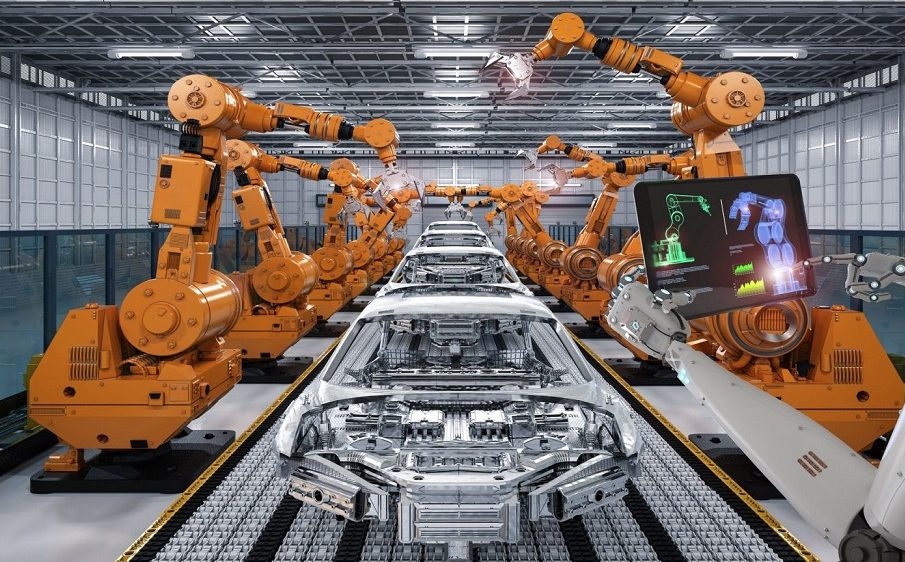
For more than a century, industrial progress was defined by mechanization, electrification, and computer-programmed automation. Assembly lines, programmable logic controllers, and robotic arms brought unprecedented consistency to global manufacturing and processing facilities. Yet, despite these advances, traditional industrial systems remained inherently rigid. Conventional machines could execute identical, repetitive tasks at remarkable speeds, but they lacked the ability to adapt to unexpected anomalies, interpret complex sensory data, or optimize processes autonomously.
The widespread integration of artificial intelligence is transforming modern industrial operations. Rather than simply following pre-written code, industrial AI platforms analyze massive streams of real-time data from shop floors, global supply chains, and environmental sensors to make informed, context-aware decisions. By uniting advanced machine learning algorithms, high-resolution computer vision, edge computing, and predictive modeling, artificial intelligence is reshaping how physical goods are engineered, manufactured, inspected, and delivered across the global economy.
From Rigid Automation to Cognitive Industrial Intelligence
To appreciate the impact of artificial intelligence in industrial environments, it is essential to distinguish between legacy automation and cognitive intelligence.
Traditional automation relies on deterministic programming. An engineer writes specific logic rules: if a sensor registers a certain temperature or position, the machine performs a predefined action. While effective for stable conditions, this framework cannot handle subtle variances in raw materials, fluctuating ambient conditions, or gradual mechanical wear.
Industrial artificial intelligence introduces dynamic adaptability. By processing historical datasets and real-time operational telemetry, AI systems learn the complex correlations that govern manufacturing processes:
-
Pattern Recognition Across Complex Variables: AI models evaluate hundreds of variables simultaneously, such as ambient humidity, motor vibration frequencies, chemical purity, and voltage fluctuations, to pinpoint operational anomalies that human operators or static thresholds cannot detect.
-
Autonomous Parameter Adjustment: Instead of halting a production line when minor deviations occur, intelligent systems adjust feeder speeds, spindle tensions, or furnace temperatures in real time to keep output within precise tolerances.
-
Continuous Self-Optimization: Machine learning architectures utilize continuous feedback loops to refine their mathematical models over time, steadily increasing throughput and reducing material waste without requiring manual reprogramming.
Predictive Maintenance and Asset Health
Unscheduled equipment downtime is one of the most expensive vulnerabilities in asset-heavy industries such as automotive manufacturing, aerospace, mining, and oil refining. Traditional maintenance strategies oscillate between reactive repairs, which occur after catastrophic failures halt production, and preventive schedules, which replace components at arbitrary calendar intervals regardless of actual mechanical condition.
Artificial intelligence enables predictive and prescriptive maintenance by analyzing telemetry captured from high-frequency industrial sensors.
-
Vibration and Acoustic AI Diagnostics: Rotating machinery, including turbines, industrial pumps, gearboxes, and compressors, emits distinct sonic and vibrational signatures as mechanical bearings degrade. Deep learning algorithms detect microscopic micro-fractures, shaft misalignments, and lubrication failures weeks before physical symptoms appear.
-
Thermal Image Anomaly Detection: Computer vision systems combined with infrared cameras monitor high-voltage electrical switchgear, furnace linings, and chemical reactors, identifying localized hot spots that signal insulation failure or electrical arcing.
-
Prescriptive Work Orders: Advanced platforms do not simply predict when an asset will fail; they generate actionable remediation plans. The software specifies the exact replacement parts required, checks internal warehouse inventory, reserves technician labor schedules, and recommends temporary operational adjustments to extend the machine lifespan until a planned maintenance window.
Computer Vision in Quality Control and Defect Inspection
Quality assurance has historically relied on manual visual spot-checks or basic optical sorting systems. Human inspectors are susceptible to physical fatigue, eye strain, and cognitive bias, particularly when inspecting thousands of identical parts moving rapidly along a conveyor line.
AI-driven computer vision systems have set a new standard for quality control across high-precision industries like semiconductor fabrication, medical device production, and consumer electronics.
-
Sub-Millimeter Surface Defect Identification: High-resolution cameras powered by convolutional neural networks scan finished surfaces at production line speeds, detecting microscopic scratches, paint irregularities, micro-voids, and weld porosity that escape the naked eye.
-
Complex Assembly Verification: Vision algorithms verify that every individual component, screw, wire harness, and fastener in an intricate assembly is installed correctly in its designated position and orientation before the product advances to packaging.
-
Real-Time Root Cause Tracing: When defect rates rise on a specific line, the system traces the flaw backward through upstream production variables, instantly alerting engineers to miscalibrated tooling or defective batches of raw materials.
Generative Design and Accelerated Product Engineering
The influence of artificial intelligence begins long before raw materials reach the factory floor. In research, development, and engineering departments, generative AI and topology optimization tools are transforming how industrial products are designed.
Engineers define structural constraints, performance parameters, material types, manufacturing methods, and budgetary limits. The AI algorithm then generates thousands of optimal structural permutations, exploring complex geometric configurations that human designers would rarely conceive.
-
Light-Weighting Critical Structures: In aerospace and automotive sectors, generative design removes excess mass from structural brackets, engine blocks, and chassis components while maintaining or enhancing tensile strength, leading to substantial lifetime fuel and energy savings.
-
Design for Additive Manufacturing: AI tools generate organic, lattice-based internal geometries tailored specifically for industrial three-dimensional metal printing, consolidating multi-part assemblies into single, highly durable structural components.
-
Virtual Physics Simulation: Physics-informed neural networks simulate fluid dynamics, thermodynamic stress, and structural crash resistance in seconds, drastically reducing the time and capital required for physical prototyping.
Intelligent Supply Networks and Autonomous Logistics
Industrial resilience depends on the continuous, synchronized movement of raw materials, sub-assemblies, and finished goods across multi-tiered supply chains. AI replaces static planning spreadsheets with dynamic, autonomous decision-making networks.
-
Dynamic Demand Forecasting: Machine learning models synthesize macroeconomic trends, weather patterns, localized consumer behavior, supplier lead times, and geopolitical risks to forecast inventory requirements with high precision.
-
Intralogistics Fleet Coordination: Within sprawling fulfillment hubs and smart factories, AI fleet management software orchestrates hundreds of autonomous mobile robots, automated guided vehicles, and robotic palletizers. The system dynamically optimizes routes to prevent traffic bottlenecks and balance material handling workflows.
-
Mitigating the Bullwhip Effect: By sharing transparent, AI-analyzed demand data across multi-tier supplier networks, manufacturing enterprises eliminate artificial demand spikes, preventing costly overproduction and catastrophic inventory shortages.
Industrial Energy Management and Process Sustainability
Energy-intensive industries, including steel manufacturing, chemical synthesis, paper processing, and data center operations, face severe regulatory pressure to lower carbon emissions and curb power consumption. Artificial intelligence serves as a powerful operational tool for environmental sustainability.
-
Optimizing Thermodynamic Processes: AI controllers manage combustion ratios, airflow parameters, and temperature curves in heavy industrial furnaces, maximizing thermal transfer efficiency while minimizing fossil fuel consumption.
-
Dynamic Grid Load Balancing: Smart manufacturing facilities use AI to coordinate energy-intensive production cycles with fluctuating electrical grid pricing and localized renewable energy availability, such as on-site solar and wind generation.
-
Water and Chemical Waste Reduction: Machine learning monitors chemical bath concentrations, industrial wash cycles, and wastewater treatment systems, ensuring precise chemical dosing and recycling process water safely back into operational loops.
Overcoming Key Roadblocks to Industrial AI Adoption
While the potential of industrial AI is immense, scaling these systems across enterprise environments presents significant technical and operational hurdles.
-
Legacy Infrastructure and Data Silos: Many industrial facilities operate legacy machinery lacking native digital interfaces. Companies must invest in non-invasive external sensor retrofits and standardized communication protocols to ingest clean, structured telemetry.
-
Edge Computing Constraints: High-speed motion control and safety systems cannot tolerate the latency or connectivity risks of transmitting data to remote cloud servers. Industrial AI requires robust edge computing hardware installed directly on the factory floor.
-
Workforce Reskilling and Cultural Trust: Deploying AI successfully requires operators, line technicians, and process engineers to trust algorithmic recommendations. Organizations must invest in comprehensive upskilling initiatives that teach workers how to interpret, validate, and collaborate with AI systems effectively.
-
Industrial Cybersecurity: Integrating operational technology with enterprise artificial intelligence networks expands the potential attack surface. Industrial leaders must deploy zero-trust architectures, secure runtime environments, and continuous behavioral anomaly monitoring to protect critical infrastructure from cyber disruptions.
Frequently Asked Questions
How does industrial edge AI differ from traditional cloud-based artificial intelligence?
Industrial edge AI executes machine learning models directly on localized hardware, such as embedded industrial computers or smart sensors situated on the factory floor. This allows the system to process data and trigger mechanical actions with near-zero latency, which is essential for high-speed robotic safety interlocks and real-time motion adjustments. Traditional cloud AI processes data in centralized off-site data centers, making it better suited for long-term historical trend analysis, multi-facility benchmarking, and large-scale model training where milliseconds do not impact immediate operations.
What is synthetic data, and how is it used to train industrial computer vision models?
Synthetic data refers to photorealistic, computer-generated digital images and three-dimensional simulations created to train machine learning algorithms. In industrial manufacturing, physical defect rates on well-tuned lines are often exceptionally low, meaning cameras rarely capture images of rare structural flaws. Engineering teams use synthetic data to generate thousands of realistic variations of cracks, surface anomalies, and improper assemblies, enabling vision models to recognize rare manufacturing defects accurately without waiting for real-world failures to occur.
How do industrial companies bridge the gap between legacy operational machinery and modern AI platforms?
Organizations modernize legacy machinery through non-invasive retrofitting. Technicians install external smart sensors, such as clip-on current transducers, magnetic vibration accelerometers, and optical sensors, directly onto older machines without altering their internal wiring or factory controls. These external sensors feed real-time operational telemetry into industrial Internet of Things gateways, which standardize the data and transmit it securely to local AI inference engines.
What is the role of explainable artificial intelligence in regulated industrial processes?
Explainable artificial intelligence refers to machine learning systems designed to provide clear, auditable, and human-interpretable reasoning for their conclusions and recommendations. In heavily regulated industries like pharmaceutical production, aerospace fabrication, and nuclear energy, standard black-box AI models that cannot explain their calculations are unacceptable. Explainable models allow quality auditors, regulatory inspectors, and plant engineers to verify the precise physical and chemical variables that drove an automated process adjustment or quality determination.
How does reinforcement learning optimize industrial process control compared to supervised learning?
Supervised learning requires large, labeled historical datasets to learn static patterns, such as identifying a defect based on thousands of labeled training images. Reinforcement learning, by contrast, trains an intelligent agent to make sequential operational decisions through trial and error within a physics-based simulation or controlled operational environment. The algorithm receives mathematical rewards for desirable outcomes, such as reduced energy use or higher throughput, allowing it to discover non-intuitive, multi-variable control strategies that outperform static human operating manuals.
What unique cybersecurity vulnerabilities emerge when deploying AI across industrial control networks?
Connecting physical operational technology to AI systems exposes facilities to specialized cyber threats, including data poisoning attacks, where malicious actors subtly alter sensor telemetry to deceive AI models into making dangerous process adjustments. It also introduces model evasion vulnerabilities, where attackers craft physical modifications that blind computer vision inspection systems to deliberate tampering, making micro-segmentation of industrial networks and cryptographic validation of all sensor data essential.
How does a human-in-the-loop architecture maintain worker safety and trust in AI-driven plants?
A human-in-the-loop architecture ensures that artificial intelligence serves as an operational assistant rather than an unmonitored decision-maker for critical or high-risk tasks. The AI system processes complex data, identifies anomalies, and recommends optimized courses of action, but leaves the final authorization of major mechanical shutdowns, chemical recipe changes, or equipment overrides to qualified human operators. This design prevents algorithmic errors, preserves human oversight, and builds institutional trust as personnel witness the accuracy of AI recommendations over time.